
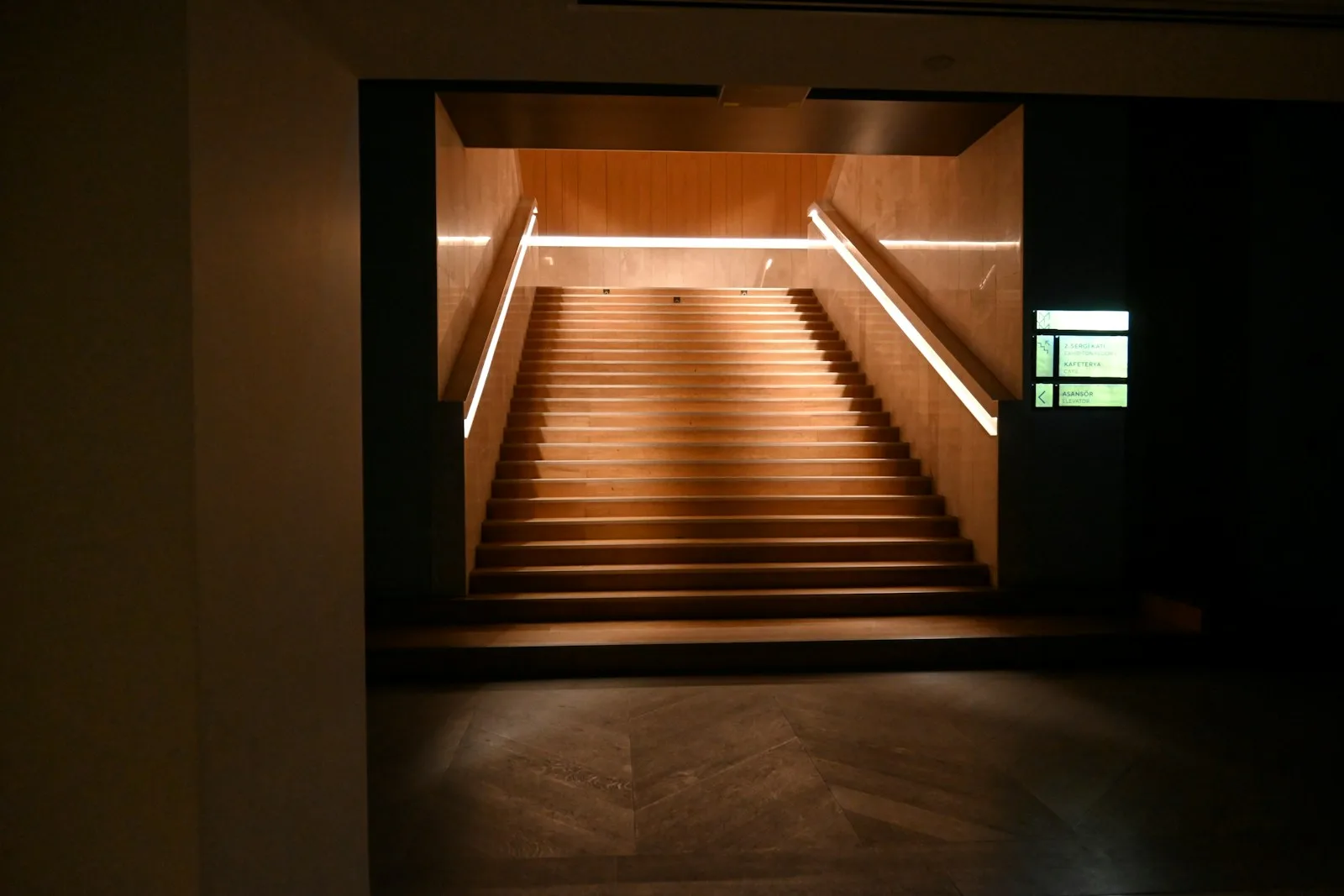
Moving a Piano Up Stairs: What San Diego Homeowners Need to Know
Stairs are the number-one variable in a San Diego piano move. Between historic homes in Mission Hills and Point Loma, hillside builds in Carlsbad, and canyon-lot properties across the county, at least a third of our moves involve stairs somewhere in the path.
What actually makes stairs hard
It isn't the weight — a well-trained crew with proper equipment can move a 900-pound grand piano up stairs safely. The variables that matter are the count of steps, the turn at the top or middle (a straight run is much easier than an L-shape or U-turn), and the overhead clearance, which is what usually surprises homeowners. A piano tipped onto its side needs 4 to 5 feet of vertical space above each stair, and low ceilings, chandeliers, or arched entries can force a different approach.
Riser height and tread depth matter too. Older homes in San Diego's historic neighborhoods sometimes have shorter treads and taller risers than modern code, which changes the angle we have to work at.
Equipment we bring for stair jobs
Every stair move goes out with heavy-duty piano boards, padded skids, ratchet straps rated for the load, and floor runners for both floors. On steeper runs we use a specialized stair ramp that turns the staircase into a controlled slide rather than a step-by-step lift. This is safer for the crew and gentler on the piano than trying to muscle it one step at a time.
Body mechanics matter — OSHA's ergonomics guidance on manual material handling is the same reason we send appropriately sized crews. A three- or four-person crew on a difficult staircase isn't overkill; it's how we prevent both damage and injury.
How stairs affect the quote
We don't charge a flat "stair fee." Instead, when you call for a quote we'll ask: How many steps? Any landings or turns? Interior or exterior? Wood, concrete, or tile? Rail on which side? The answers determine crew size and equipment, which determine cost. For most residential moves the added time is modest — 20 to 40 minutes on top of a standard load or unload.
Exterior stairs common in canyon-edge neighborhoods add their own considerations: sun exposure on the piano case, uneven step depth, and sometimes a gate we need to unhinge. Mention these when you book.
What homeowners can do to help
Clear the entire stair path, including landings. Remove framed art from stair walls. Secure or remove any handrails that would obstruct the piano's path — if the rail comes off, we can put it back after. Make sure pets are contained in another part of the house.
Also: don't try to move the piano to the base of the stairs before we arrive. Moving a piano even ten feet without proper equipment risks damage to the instrument and to floors.
What about upright pianos?
Upright and console pianos have a lower profile and are typically easier on stairs than grands, but they're still 400 to 800 pounds and top-heavy. The same equipment and crew principles apply. If you're moving an upright and the stairway is narrow, tell us up front so we bring the right dollies.
Schedule a stair move
All of our local piano moves in San Diego, Chula Vista, Carlsbad, Oceanside, and Escondido include stair-capable crews. Long-distance moves out of San Diego also handle stairs at both ends. Get a free quote and we'll price the specific staircase, not a generic surcharge.
Further reading
OSHA Ergonomics Guidance — U.S. Department of LaborNeed a piano moved in Southern California?
San Diego Piano Movers has moved pianos across San Diego, Riverside, Orange County, and beyond since 1989. Call for a free quote from a piano-only specialist crew.
More from the blog
Piano Care
Moving an Antique Piano: What Changes When the Instrument Is 100 Years Old
October 12, 2026 · 6 min read
Piano Care
Moving a Piano in the Rain: How We Protect Your Instrument in Wet Weather
October 5, 2026 · 6 min read
Moving Tips
How Long Does It Take to Move a Piano? Realistic Timings by Type and Access
September 28, 2026 · 7 min read