
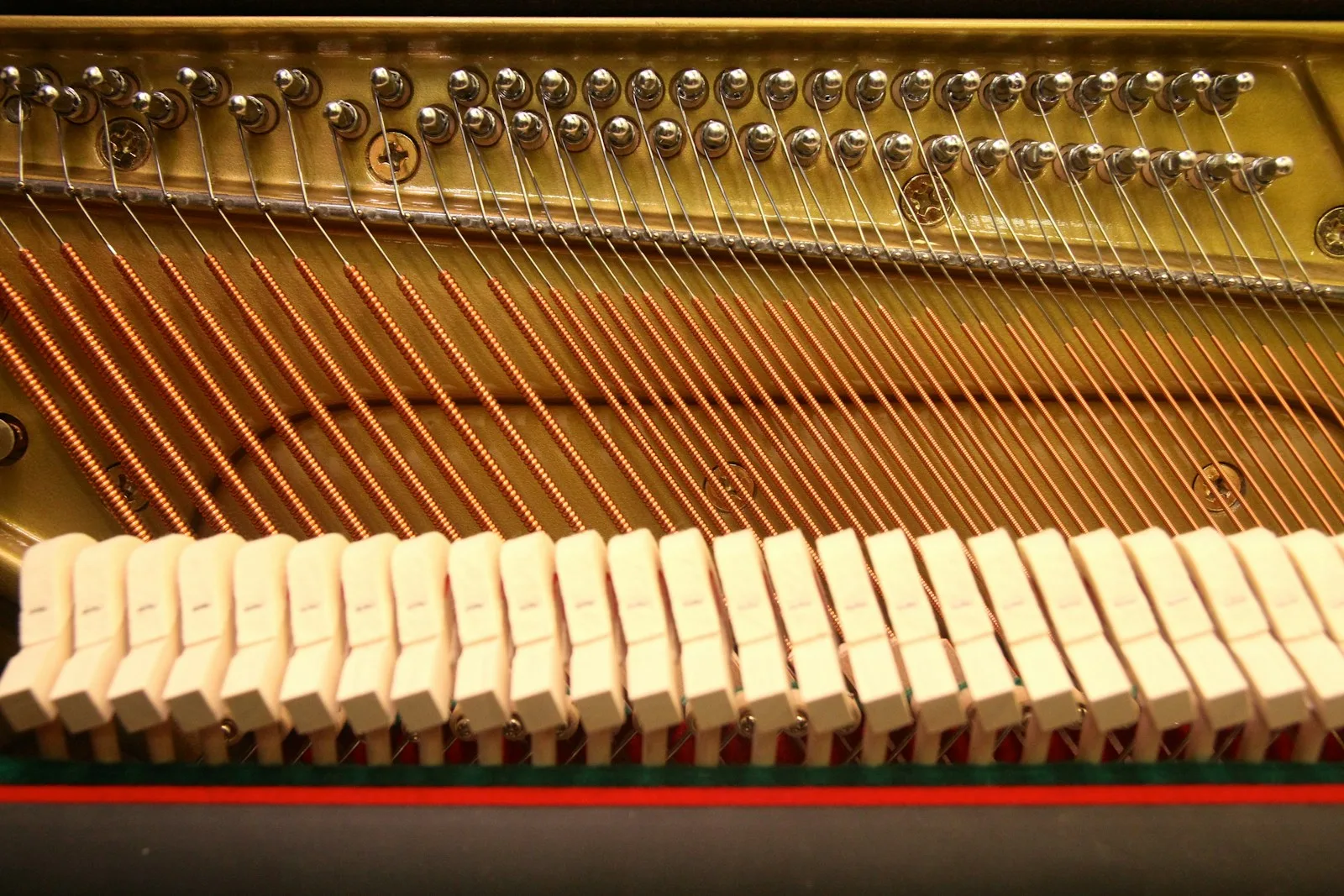
Should You Tune Your Piano After a Move? A San Diego Guide
One of the top questions we get after a move: "Should I tune the piano now?" The short answer is not yet. Piano tuning after a move is a real necessity, but timing it correctly makes the difference between a tuning that holds and one that drifts within days.
Why moving affects tuning
A piano goes out of tune primarily because of humidity, not because of vibration during transit. Modern piano moving trucks are padded and stable enough that a well-secured piano barely notices the drive. What actually shifts the tuning is the change in relative humidity between the origin room and the destination room.
Every wooden component in the piano — soundboard, pin block, bridges — responds to moisture in the air. Coastal San Diego neighborhoods run humid year-round; inland communities like Temecula and Escondido swing between dry summers and wetter winters. Move a piano between those environments and the wood needs time to reach a new equilibrium.
How long to wait
Our standard guidance:
- Same-city move: Wait 2 weeks before tuning.
- Coastal to inland or inland to coastal: Wait 3–4 weeks.
- Piano coming out of long-term storage: Wait a full month.
- Interstate long-distance move: Wait 4–6 weeks.
The reason is simple: if you tune before the wood has settled, the tuning will drift as the humidity balance completes. Two tunings in six weeks costs twice as much and doesn't deliver a better result than one tuning at the right moment.
What to expect from the first post-move tuning
Expect a full tuning, not a "touch-up." Even a short local move can put the piano meaningfully out of tune — a quarter step or more on some notes isn't unusual. Budget for a full session with your technician, and if the piano is more than 5 cents flat overall, ask about a pitch raise before the fine tuning.
If you don't have a regular tuner in San Diego, the Piano Technicians Guild guide to hiring a technician explains what credentials to look for. A Registered Piano Technician (RPT) has passed the guild's exams — for grand pianos in particular, that credential is worth seeking out.
Signs the piano isn't ready to tune
If you play a chord and hear an obvious beat that changes across the day, the piano is still acclimating. That's normal in the first week or two. Wait it out. Also normal: minor creaks from the case as it settles into the new room's temperature and humidity. Those are the wood adjusting and are almost always harmless.
Room placement affects tuning stability
Where you place the piano in the new room matters as much as when you tune it. Avoid:
- Direct sunlight through unshaded windows
- HVAC vents blowing directly on the case
- Exterior walls with poor insulation
- Rooms with radical humidity swings (unfinished basements, sunrooms)
An interior wall in a temperature-stable room is ideal. If that's not possible, consider a room humidifier or a piano humidity control system.
What we do before we leave
Our local piano moving crews double-check the placement, level the piano if needed, install the legs, replace the lyre, and confirm the pedal action works. What we don't do is tune — that's a separate profession requiring different training. Give the piano its two weeks, then call a tuner.
Ready to schedule your move?
Request a free quote and we'll walk you through the whole process, from the move day to the tuning timeline.
Further reading
How to Hire a Piano Technician — Piano Technicians GuildNeed a piano moved in Southern California?
San Diego Piano Movers has moved pianos across San Diego, Riverside, Orange County, and beyond since 1989. Call for a free quote from a piano-only specialist crew.
More from the blog
Piano Care
Moving an Antique Piano: What Changes When the Instrument Is 100 Years Old
October 12, 2026 · 6 min read
Piano Care
Moving a Piano in the Rain: How We Protect Your Instrument in Wet Weather
October 5, 2026 · 6 min read
Moving Tips
How Long Does It Take to Move a Piano? Realistic Timings by Type and Access
September 28, 2026 · 7 min read