
Moving a Piano Yourself vs. Hiring Movers: An Honest Cost and Risk Breakdown
We're a piano moving company, so you'd expect us to say never do it yourself. That isn't quite our position. There are moves we'd tell a friend to handle on their own, and there are moves where we'd tell that same friend to put the furniture dolly down and walk away. The line between them is worth understanding before you commit either way.
What a DIY piano move actually requires
The equipment list is longer than most people plan for:
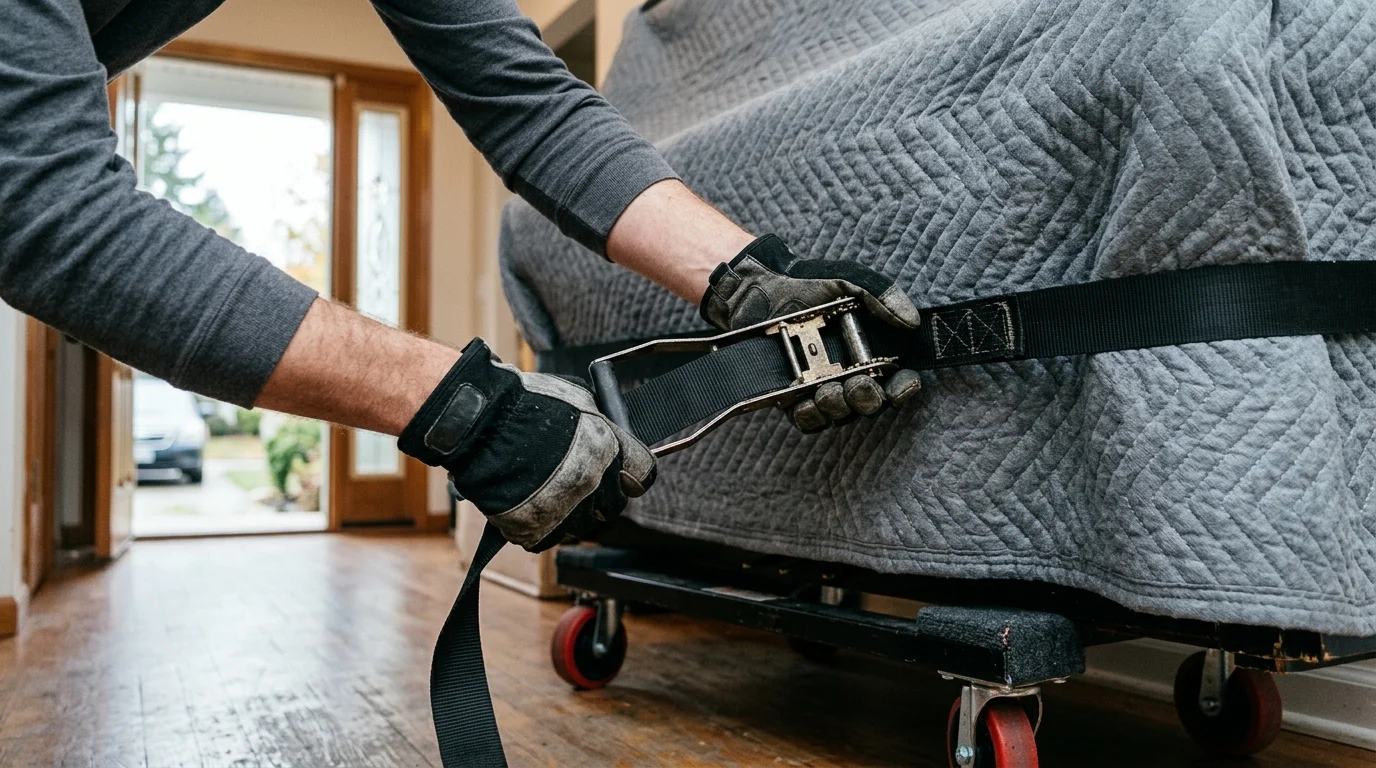
- A piano dolly or four-wheel dolly rated over 1,000 lbs. A standard appliance dolly is not this.
- A piano board or skid with padding, for uprights and for any grand that has to come off its legs. This is the piece almost nobody rents, and it's the piece that prevents tipping.
- Ratchet or cam straps rated for the load, not bungee cords.
- Four to six thick moving blankets, enough to cover the case, the lid, and the legs separately.
- Floor runners at both ends.
- A truck with a ramp or liftgate. A pickup bed is a non-starter — lifting a piano to bed height is the most dangerous part of the whole job.
- Three to four able adults, minimum, who have all agreed on the plan out loud before anybody lifts.
Realistically that's a couple hundred dollars in rentals for a local move, plus a day of somebody's weekend and whatever you owe your friends afterward.
The three ways a DIY move goes wrong
1. Somebody gets hurt
This is the risk people discount most. NIOSH's guidance on work-related musculoskeletal disorders is blunt about the mechanism: lifting, pushing, pulling, and carrying heavy irregularly shaped objects is exactly the load pattern that produces back and shoulder injuries, and assistive equipment is the intervention that prevents them. A piano is the textbook irregular object — top-heavy, no good handholds, and unforgiving of a bad grip.
Stairs turn this from an injury risk into something worse. Once a piano begins to tip on a stairwell, gravity does the rest, and a stairwell offers nobody a place to step aside. That's the specific scenario we plan crew size and equipment around, and it's covered in more detail in our guide to moving a piano up stairs.
2. The house takes damage
Doorjambs, drywall corners, stair treads, and hardwood floors are the usual casualties. A gouged jamb is a small repair. A cracked stair tread or a scored hardwood floor running the length of a hallway is considerably more. In a rental or a condo, it's also a deposit or an HOA conversation.
3. The piano takes damage
Some of this is cosmetic — a rubbed finish, a dented lid corner. Some of it isn't. Dropping an upright on one corner can crack the plate or split the pinblock, and both of those are the kind of repair that costs more than the instrument is worth. Grand piano legs are the other common casualty, because they're load-bearing in one direction and quite weak in another, and they come off in a specific order for a reason.
The insurance gap
This is the part that surprises people. If you damage your own piano while moving it, that's on you — there's no third party to make a claim against. If you damage a friend's back, the situation gets complicated fast. A licensed mover carries cartage coverage for the instrument in transit and workers' compensation for the crew, which is the entire reason those two line items exist. We break down what to verify in our list of questions to ask a piano mover before booking.
When DIY is genuinely reasonable
We'd say go for it if all of these are true:
- It's a digital piano, a stage keyboard, or a small spinet under about 350 pounds
- The entire path is level — no stairs, no steps, not even a raised threshold you have to lift over
- You have a real dolly and rated straps, not improvised substitutes
- You have three or more people and a truck with a ramp
- The instrument has sentimental or modest monetary value, not high value
Moving a console upright ten feet to the other side of the same room? Also fine, with two people, a blanket under the casters, and no rush. Moving that same upright out of a second-story unit in Escondido in August? Call somebody.
What hiring actually costs
A straightforward local upright move within San Diego County generally lands well under what a single injury or a single repaired doorjamb would cost you, and a grand piano move costs less than one tuning-plus-regulation cycle on a damaged action. Our pricing breakdown by piano type lays out the variables so you can compare honestly rather than guess.
The other thing you're buying is speed. A crew that does this every day loads an upright in 20 to 30 minutes. A DIY crew doing it for the first time takes two hours, and the last 30 minutes of those two hours is when people are tired and mistakes happen.
The middle option most people miss
You don't have to choose between doing the whole move and hiring out the whole move. Plenty of our customers in Chula Vista and Murrieta handle their own boxes and furniture with a general moving company or a rental truck, and hire us for the piano alone. It's one line item, it's usually done in under two hours, and the instrument is handled by people who only move instruments.
If the piano is going into storage between homes, that's the same conversation — we can pick it up, hold it in climate-controlled storage, and deliver it when the new place is ready.
Get a number before you decide
The best way to make this call is with a real price in front of you rather than an estimate off a national average. Tell us the piano type, the stairs at both ends, and the two addresses, and we'll quote it on the phone. Request a free quote here — and if we think you can handle it yourself, we'll say so.
Need a piano moved in Southern California?
San Diego Piano Movers has moved pianos across San Diego, Riverside, Orange County, and beyond since 1989. Call for a free quote from a piano-only specialist crew.
More from the blog
Piano Care
Moving an Antique Piano: What Changes When the Instrument Is 100 Years Old
October 12, 2026 · 6 min read
Piano Care
Moving a Piano in the Rain: How We Protect Your Instrument in Wet Weather
October 5, 2026 · 6 min read
Moving Tips
How Long Does It Take to Move a Piano? Realistic Timings by Type and Access
September 28, 2026 · 7 min read