
Moving an Antique Piano: What Changes When the Instrument Is 100 Years Old
A 1915 upright and a 2015 upright can sit side by side at nearly the same weight and nearly the same footprint, and still need two completely different handling plans. Age does not just make a piano more valuable to the family that owns it. It changes the materials, the joinery, and the failure points.
We have been moving pianos and organs across Southern California since 1989, and antique instruments come up constantly: the tall Victorian upright that came west with somebody's grandmother, the ornate 1920s grand with a case that has been refinished twice. Here is what our crews look at before an antique move, and what owners should know going in.
What counts as an antique piano
There is no single cutoff, but for handling purposes we treat roughly pre-1930 instruments as a separate category. A few reasons:
- Hide glue was standard. Animal protein glue was the norm in piano building for most of the instrument's history. It is reversible and repairable, which conservators love, but it is also sensitive to heat and moisture in ways modern synthetic adhesives are not.
- Veneers were thicker but the substrate is older. Early veneers were often sawn rather than peeled, so they are thicker than what you see on a 1980s console. That does not make them safe. A century of expansion and contraction leaves bubbles, lifted edges, and hairline checks that will catch on a strap or a pad seam.
- Cases were built to show off. Carved legs, fluted columns, scrolled music desks, beveled mirrors on some player cabinets, applied moldings. Every projecting detail is a snag point and a lever.
- Hardware has aged. Caster bolts, leg plates, lyre braces, and pedal rods on a 100-year-old instrument may be original and may be corroded.
Tall uprights are heavier than people expect
The so-called upright grand of the late 1800s and early 1900s often stands 54 to 60 inches tall, with a long back, thick posts, and a full iron plate. Many of these land in the 600 to 800 pound range, and some period player uprights go past 900 pounds once the pneumatic stack is in place. For a general reference on what different instruments run, see our breakdown of how much a piano weighs by type.
That height matters as much as the weight. A 58-inch upright is top-heavy on a dolly and will not clear some older doorways with a transom or a low soffit. In older San Diego neighborhoods we routinely measure before we commit to a route, because 1920s and 1930s houses do not have 1990s clearances.
If the instrument has an original player mechanism, the math changes again. Our post on why player pianos are heavier and more fragile than they look covers how the stack, bellows, and spool box add weight high and forward in the cabinet.
Why hide glue changes the plan
Hide glue softens with heat and humidity. That is a feature in a repair shop and a problem in the back of a truck parked in the sun in Indio in August.
Practically, this means a few things for an antique move:
- We avoid letting an antique sit in a hot vehicle longer than necessary. Loading order gets planned so the instrument is not the first thing in and the last thing out on a long day.
- We do not clamp or strap aggressively across glued case joints. Pressure that a modern laminated cabinet shrugs off can stress a 100-year-old mitered corner.
- We pay attention to where the piano is going to live. A piano moved from a coastal condo in Carlsbad to a desert home in Palm Desert is moving between two very different humidity environments, and old glue joints and old soundboards notice.
Summer is the hardest season for this. Our guide to summer piano moving and heat and humidity in San Diego explains how we schedule around the worst of it. Winter has its own version of the problem, which is rain, and we cover that in moving a piano in wet weather.
Protecting fragile veneer and finish
Shellac was the common finish on pre-1930 cases. It is beautiful, it is repairable, and it is soft. It will bloom if it gets damp, it will mar under sustained pressure, and some modern tapes and plastics will stick to it or leave residue.
How our crews adapt:
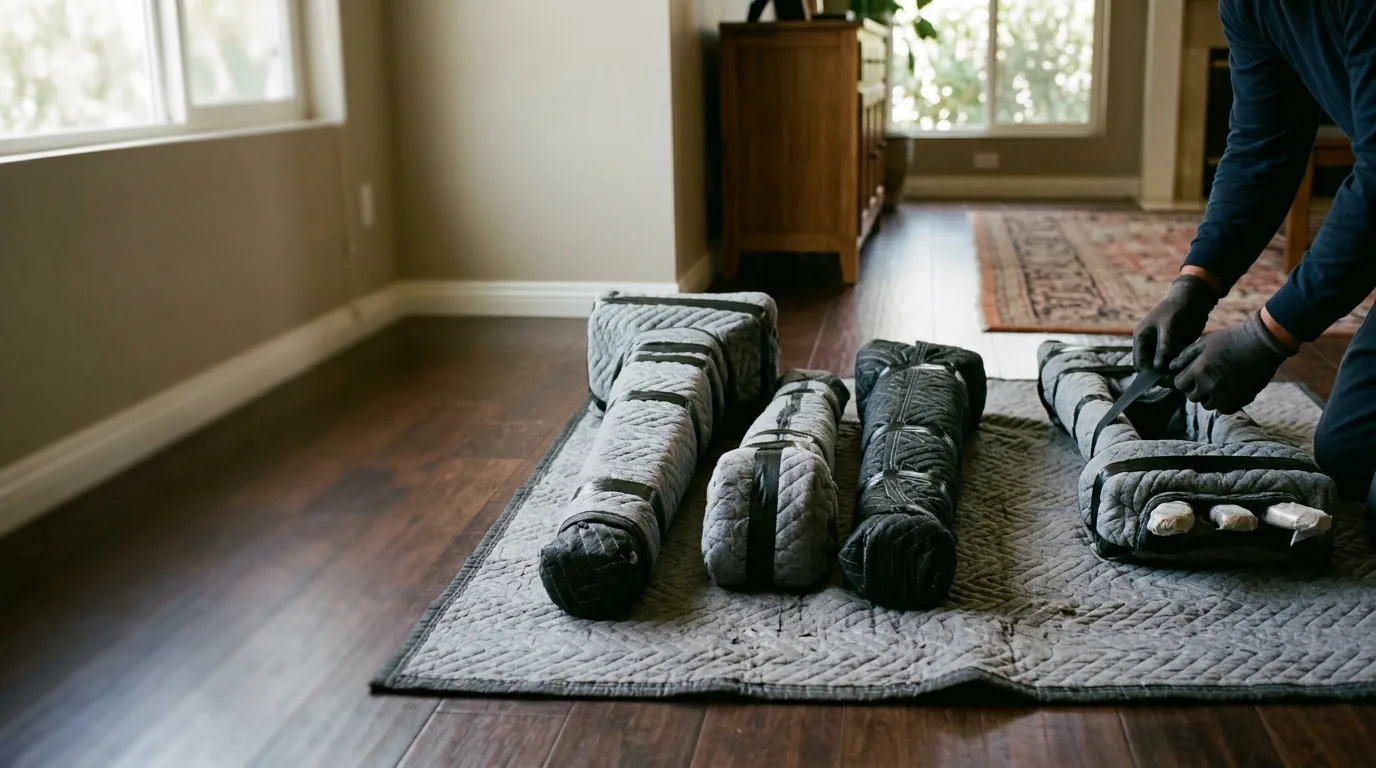
- Pad first, then strap. Multiple layers of quilted padding so no strap or board touches the finish directly.
- No adhesive on the finish. Tape goes on padding, never on shellac or old lacquer.
- Loose parts come off or get isolated. Lid props, fallboard, music desk, and any applied ornament that is already loose gets documented and wrapped separately rather than left to rattle.
- Photograph existing damage. Chips, lifted veneer, and old repairs get recorded before we touch the instrument. That protects everyone. Our article on coverage, claims, and documentation explains why that record matters.
For broader context on how conservation professionals think about old wood, finishes, and reversible adhesives, the American Institute for Conservation is a good place to read up.
Heirloom grands: legs, lyre, and the plate
An older grand comes apart the same way a modern one does: lid and music desk secured, pedal lyre removed, legs removed, body onto a padded board on its bass side. The difference is condition.
On an antique grand we check the leg plates and lyre braces before any weight shifts. Original screws in 100-year-old wood sometimes have very little bite left. We also look at the knuckle where the leg meets the case, because a repaired or shimmed leg is common on old instruments and not always obvious from across the room.
Owners can help by clearing the route and leaving everything else alone. Our grand piano preparation checklist walks through what is useful to do in advance and what is better left to the crew.
Stairs, narrow halls, and older buildings
Antique pianos often live in antique houses. Craftsman homes, 1920s bungalows, and converted properties frequently have narrow stair treads, tight landings, and railings that were never meant to accommodate 700 pounds on the move.
We measure doorways, turns, and stair width before scheduling the labor, and we plan the carry so the instrument's heaviest, most fragile face is never the one taking the load. If your route includes stairs, our piece on moving a piano up stairs covers what we need to know ahead of time. Elevator buildings have their own rules, and apartment and condo moves usually involve a certificate of insurance and a reserved window.
Storage between homes
If the antique is going into storage during a remodel or a sale, a standard self-storage unit is a bad idea. Temperature swings and humidity swings are exactly what old glue joints and old soundboards do not tolerate. We offer climate-controlled piano and organ storage for this reason, and our post on why climate control matters in Southern California explains the conditions we are protecting against.
After the move
Expect to have the instrument tuned once it has settled in its new room. That is a technician's job, not ours, but our guide to tuning after a move explains sensible timing. If the antique shows any pre-existing structural issues, a technician's evaluation before you invest in restoration is worth the visit.
Getting a quote on an antique move
Cost on an antique move is driven by the same variables as any piano move, plus condition: instrument type and weight, stairs and turns at both ends, distance, truck access, and whether storage is involved. Age itself does not add a line item, but the extra handling time often does.
Tell us the make, the approximate year, the height or length, and what the access looks like at both addresses. Photos of the case, the legs, and the doorways help a lot. We handle local piano moving and long-distance piano moving throughout San Diego and across Riverside, Orange, and San Bernardino counties.
Call (800) 499-5733 or request a quote, and tell us what you have. If it has been in the family for three generations, say so. It changes how we plan the day.
Need a piano moved in Southern California?
San Diego Piano Movers has moved pianos across San Diego, Riverside, Orange County, and beyond since 1989. Call for a free quote from a piano-only specialist crew.
More from the blog
Piano Care
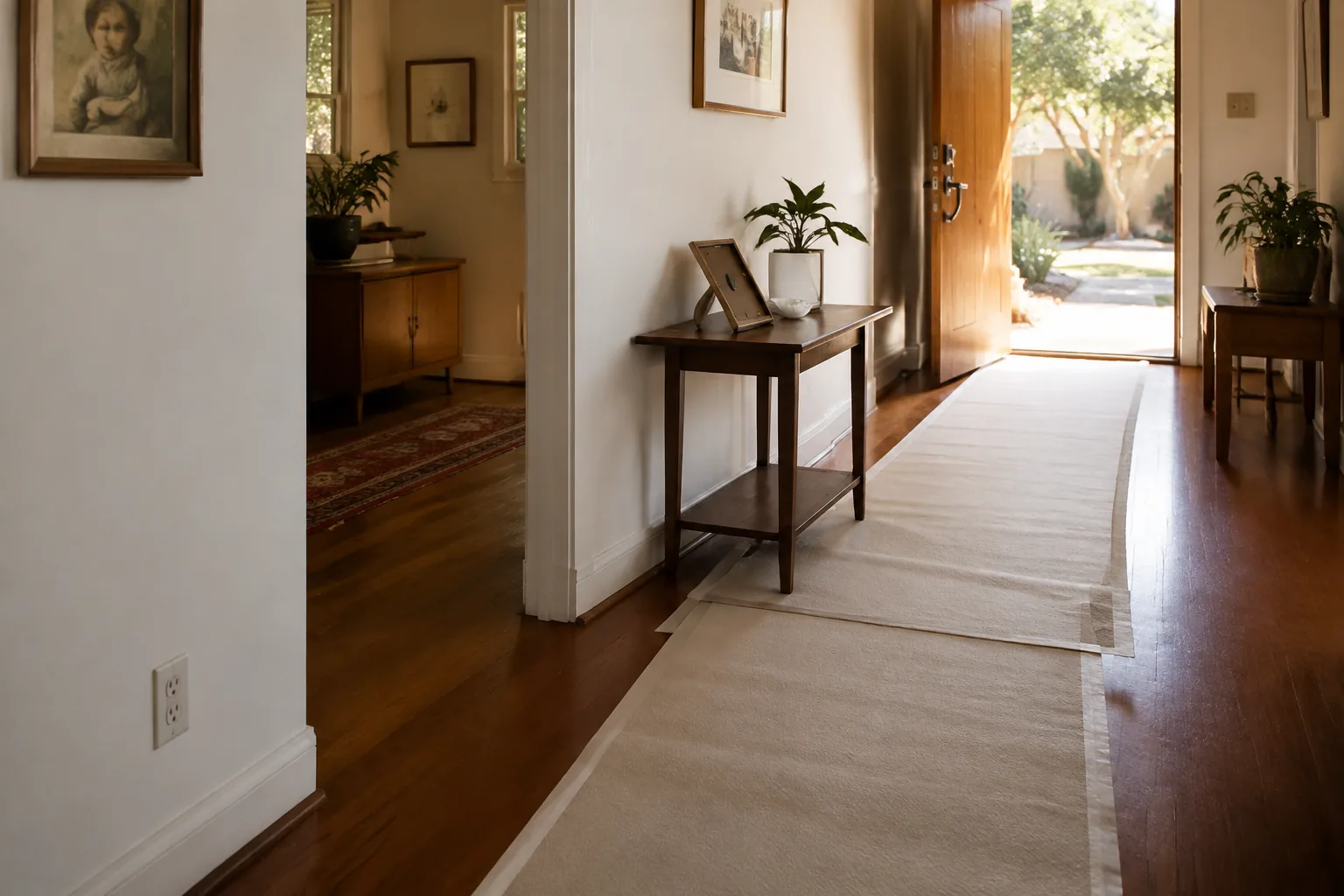
Moving a Piano in the Rain: How We Protect Your Instrument in Wet Weather
October 5, 2026 · 6 min read
Moving Tips
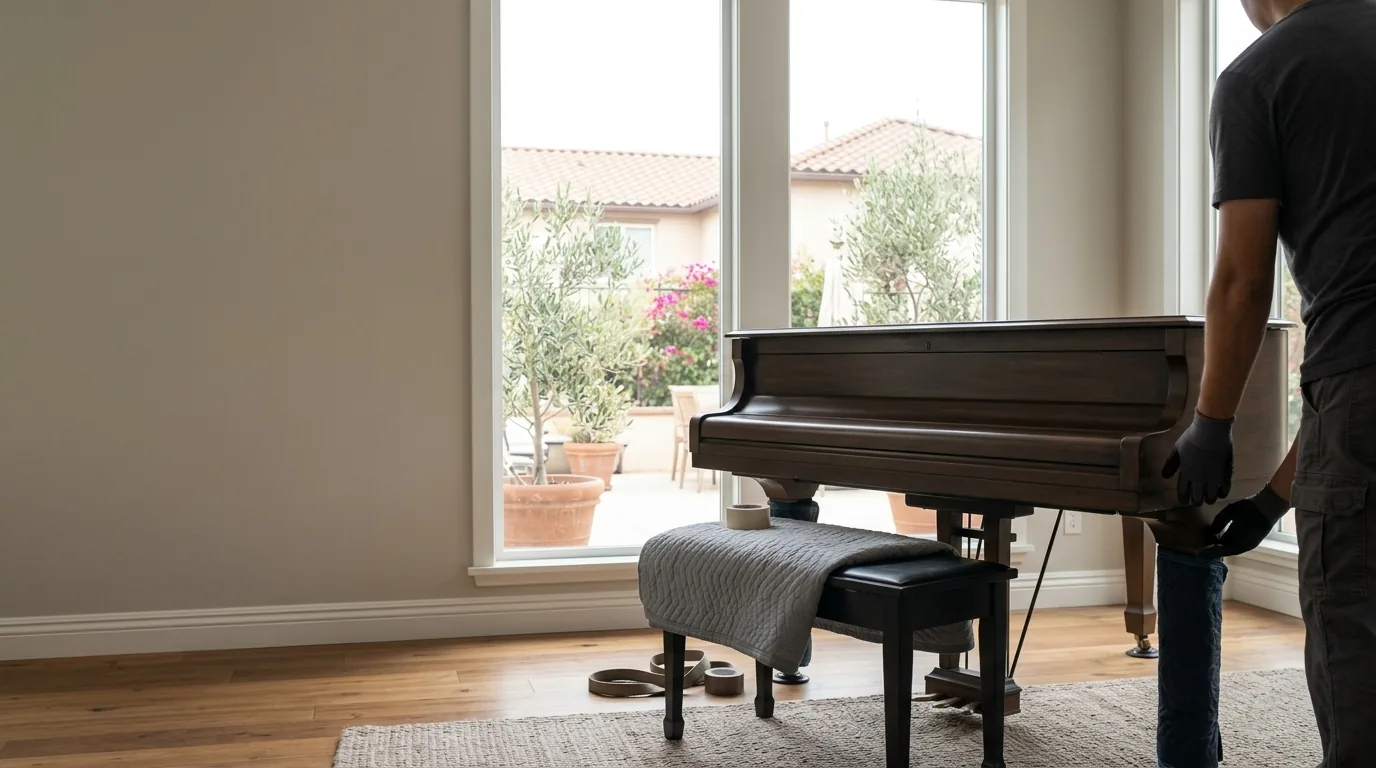
How Long Does It Take to Move a Piano? Realistic Timings by Type and Access
September 28, 2026 · 7 min read
Hiring a Mover
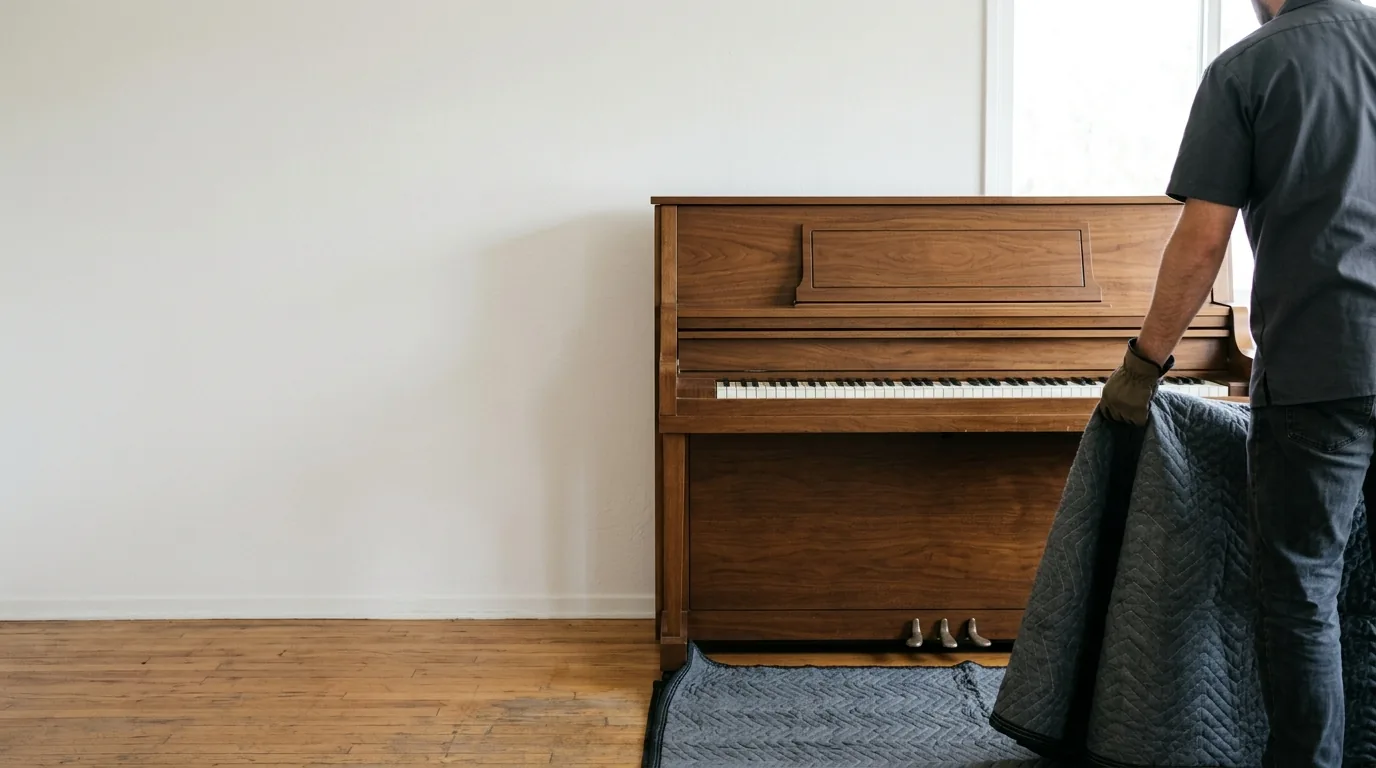
What Happens If Movers Damage My Piano? Coverage, Claims, and Documentation
September 21, 2026 · 7 min read