
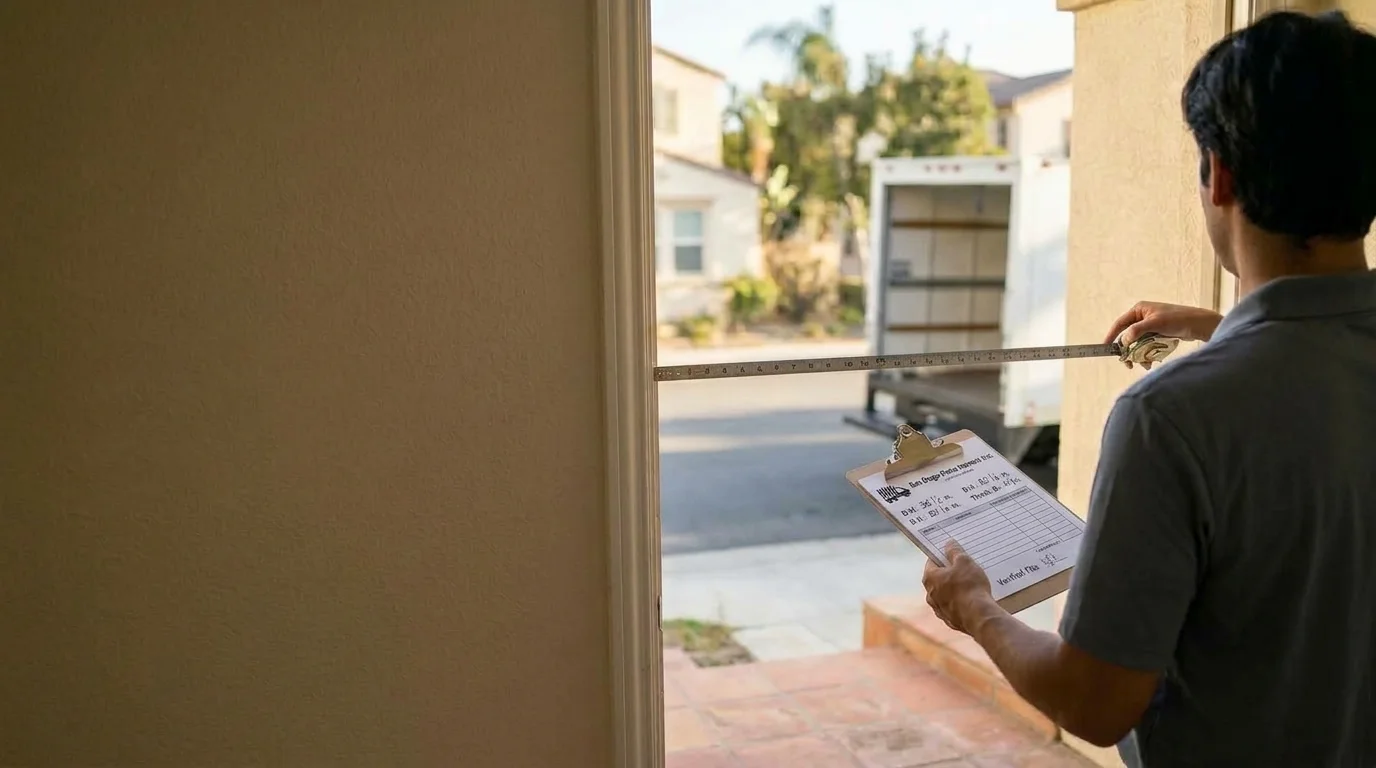
10 Questions to Ask a Piano Mover Before You Book
Piano moving is not a licensed trade the way plumbing or electrical work is. There's no piano-specific certification a company has to hold, which means the barrier to advertising piano moving services is a truck and a website. Most of the damage claims we hear about come from general movers who took a piano job as an add-on — not from bad actors, but from people who genuinely didn't know what they didn't know.
Here are the ten questions we'd ask, in the order we'd ask them. Ask us the same ones.
1. Are you licensed to move household goods in California?
In-state movers operating in California are regulated by the Bureau of Household Goods and Services, part of the Department of Consumer Affairs. BHGS maintains a public license search, so you can verify a company rather than take its word for it. If a mover can't produce a license number, or gets cagey when you ask for one, that's your answer.
For moves crossing state lines you also want a USDOT number and an MC (motor carrier) number, both verifiable through federal databases. Our guide to cross-country piano moves from San Diego covers what interstate authority actually means for your instrument.
2. Do you carry cartage insurance, and for how much?
This is the question most people skip and it's the most important one. Commercial auto insurance covers the truck. General liability covers your property. Cartage insurance covers the piano itself while it's in the mover's custody — and it's a separate policy that not every mover carries.
Ask for the coverage limit, not just a yes. Ask whether coverage is by declared value or replacement value, and ask for a certificate of insurance in writing. If you own a high-value instrument, the limit matters more than the existence of the policy.
3. Do you carry workers' compensation?
If a mover is injured on your property and the company doesn't carry workers' comp, you can end up on the wrong end of that claim through your homeowners policy. This is not hypothetical in a trade where the load is 600 pounds and the path includes stairs. Ask directly, and ask for it on the certificate.
4. Is this your own crew, or subcontracted?
Plenty of companies book the job and hand it to whoever is available that day. That's not automatically bad, but it means the insurance, the training, and the equipment you just verified may belong to a different company than the one you hired. Ask who will physically be in your house, and whether they work for the company on the invoice.
5. How many pianos do you move a year?
Years in business is a weaker signal than volume. A general moving company can be 40 years old and move 15 pianos a year. Ask for the number, and ask what percentage of the company's work is pianos and organs specifically. A specialist answers instantly because it's the whole business — ours has been pianos and organs only since 1989.
6. What equipment comes on the truck?
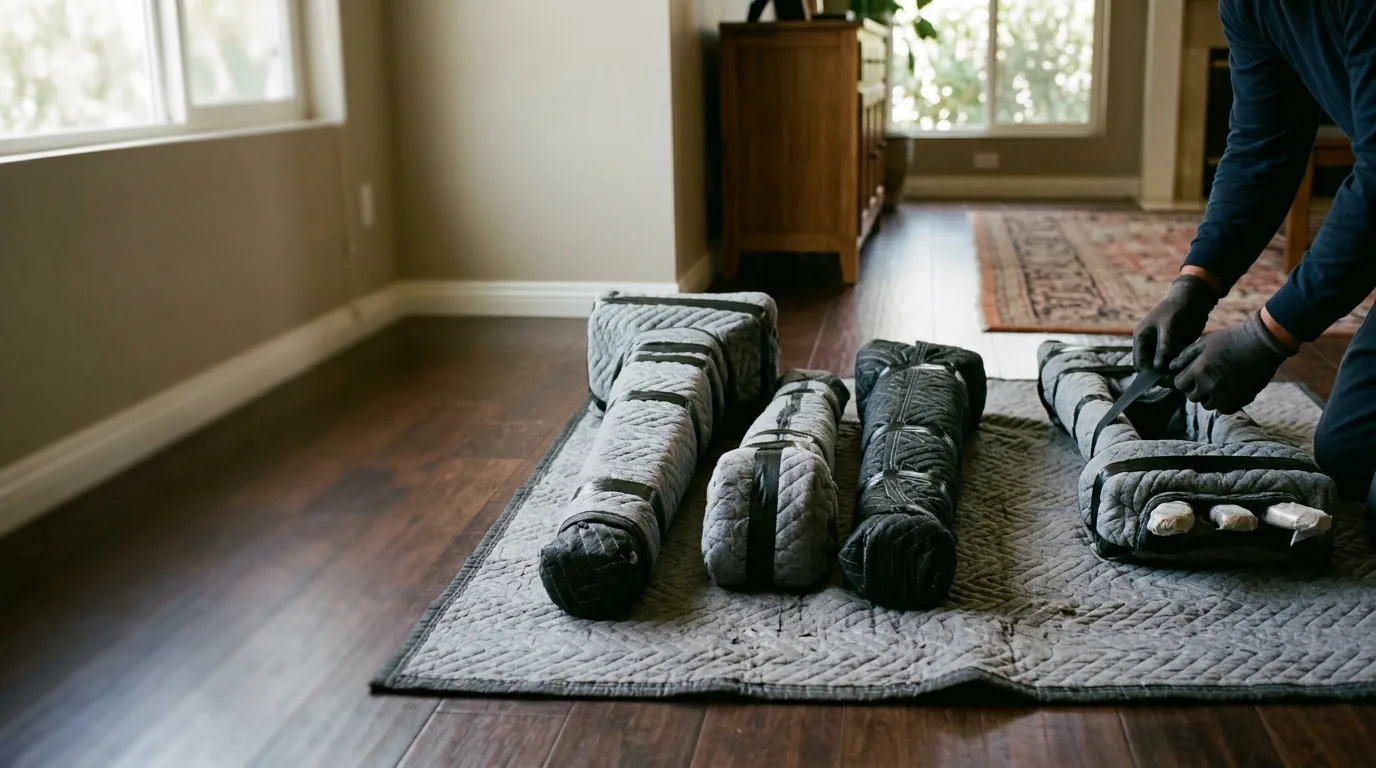
You're listening for specifics: piano boards and skids, four-wheel piano dollies rated above 1,000 pounds, ratchet straps, quilted covers sized for pianos rather than generic furniture pads, floor runners, and door jamb protectors. For grands, ask whether they disassemble legs, pedal lyre, and lid on site — the answer should be yes, and the sequence should be something they can describe without hesitating.
For heavy or awkward installs, ask whether they have crane or hoist capability. It comes up more than you'd think on canyon-lot properties and second-story balconies across San Diego County.
7. How do you handle stairs, and how does that change the price?
A specialist will ask you questions back: how many steps, straight run or turns, interior or exterior, surface material, rail on which side, overhead clearance. If a mover quotes stairs without asking any of that, they're guessing. Our write-up on what actually makes stairs hard explains why those specific details drive crew size.
8. Can I get a written estimate, and what would change it?
Get the estimate in writing before the truck is scheduled, and get the list of things that could change it — extra flights, a longer carry from the truck to the door, a building that requires a certificate of insurance, a piano that turns out to be a full upright rather than a console. A good mover tells you upfront which variables move the number. A bad one produces surprises on move day, when you have no leverage.
9. Do you handle building requirements?
If either end of the move is a condo, high-rise, or HOA-governed community, somebody has to produce a certificate of insurance naming the building as additional insured, reserve the elevator, and work inside the move-in window. Ask whether the mover has done it before and how much lead time they need. We cover the full process in moving a piano into a San Diego apartment or condo.
10. Can I see recent reviews and references?
Recent matters more than volume. A company with 200 reviews and nothing in the last 18 months has changed since those reviews were written. Look for reviews that mention your situation specifically — a grand piano, a stair move, a long-distance haul, an organ. Ours are on our reviews page and on our Google Business Profile.
Two answers that should end the conversation
If a mover says they'll figure out the stairs when they arrive, or quotes a firm price without asking a single question about access, you've learned what you needed to know. Piano moving is a planning trade. The work on move day is the easy part, and it's easy precisely because the planning happened first.
The short version
License, cartage insurance limit, workers' comp, own crew, annual piano volume, written estimate. Six answers and you'll know within five minutes whether you're talking to a specialist or a generalist.
We're happy to be asked all of it. Request a quote for a local move, a long-distance move, or an organ move and bring the list — we'd rather you hire us with your eyes open.
Need a piano moved in Southern California?
San Diego Piano Movers has moved pianos across San Diego, Riverside, Orange County, and beyond since 1989. Call for a free quote from a piano-only specialist crew.
More from the blog
Piano Care
Moving an Antique Piano: What Changes When the Instrument Is 100 Years Old
October 12, 2026 · 6 min read

Piano Care
Moving a Piano in the Rain: How We Protect Your Instrument in Wet Weather
October 5, 2026 · 6 min read
Moving Tips
How Long Does It Take to Move a Piano? Realistic Timings by Type and Access
September 28, 2026 · 7 min read