
Protecting Hardwood Floors During a Piano Move: Caster Cups, Runners, and Real Causes of Damage
Homeowners usually worry about the piano. Then the crew leaves, the light changes in the afternoon, and they notice three small dimples in the oak by the window and a white score mark running toward the hallway.
Floor damage during a piano move is almost always preventable, and it almost never comes from the part of the move people expect. It is rarely the long push across the room. It is the pivot, the grit, the door jamb, and the final few inches of positioning. Here is what actually causes it and what we do to stop it.
Why pianos are hard on floors: it is pressure, not weight
An upright piano typically runs 300 to 800 pounds. A baby grand is often 500 to 650 pounds, a 6-foot grand 650 to 800, and a concert grand can exceed 1,000. You can see real numbers by type in our breakdown of how much a piano weighs.
But weight alone is not what dents wood. Pressure is. A grand piano rests on three legs, each ending in a caster with a contact patch that can be smaller than a quarter. Divide 700 pounds across three contact patches of roughly one square inch each and you are applying several hundred pounds per square inch to a finished floor.
Red oak sits around 1,290 on the Janka hardness scale, American walnut closer to 1,010, and many wide-plank and European-style floors are softer still. Engineered floors add another variable: a wear layer that may only be 0.6 to 3 millimeters thick over plywood. Once a dent breaks through the finish on a thin wear layer, sanding it out is often not an option. The National Wood Flooring Association is a good reference if you want to understand your specific floor construction before any heavy item comes through the door.
The four things that actually cause the damage
1. Grit under the wheel
This is the single biggest cause of scratches we see. A piano caster or dolly wheel rolling over a grain of sand acts like a stylus. In coastal homes from San Diego to Oceanside, and in desert homes around Palm Desert and La Quinta, there is fine grit on floors even when they look clean. Covering the travel path is more reliable than sweeping, which is why we lay protection rather than trusting a broom.
2. Pivoting in place
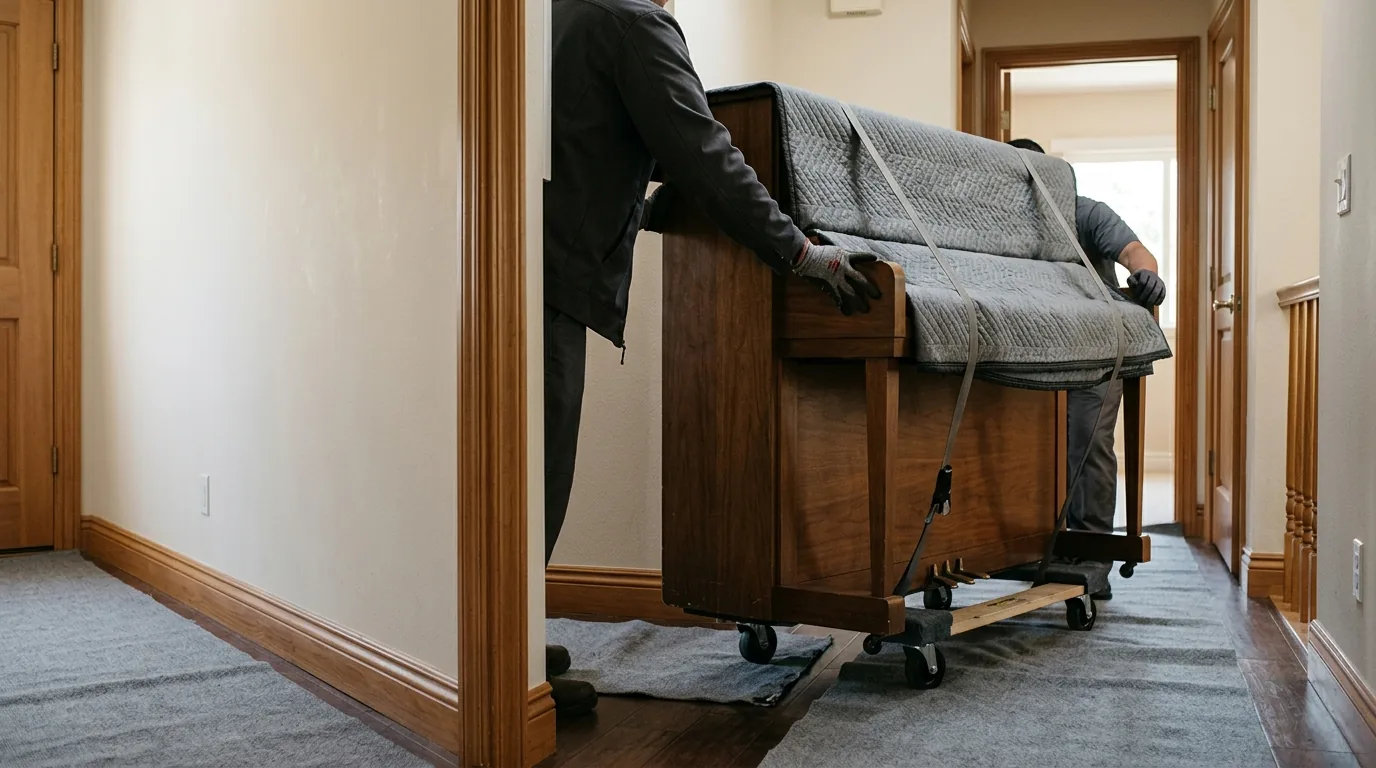
Rolling a load forward distributes wear along a line. Twisting it in place concentrates everything into one spot and grinds. Most of the circular scuff marks homeowners find are from a piano or dolly being rotated rather than rolled. Our crews plan the approach angle so the instrument travels in straight lines and gets turned on protected surfaces, not on bare finish.
3. Setting down too fast
The last six inches matter more than the first twenty feet. When a grand comes off the piano board and onto its legs, or an upright comes off the dolly, an uncontrolled drop of even an inch turns static weight into impact force. That is what makes the crisp, round dents with a bruised ring around them.
4. The doorway
Door jambs, casings, and baseboards take a beating because clearance there is tightest. A standard 32-inch interior door leaves very little margin for an upright that is 24 to 26 inches deep with a dolly under it. Damage at the jamb often transfers to the floor as well, when a corner gets bumped and the load shifts sideways.
What we put down before the piano moves
- Floor runners along the full travel path. Heavy neoprene or hardboard runners, laid edge to edge from the instrument to the exit, so wheels never touch finished wood. The path is covered before anyone touches the piano, not as they go.
- Padding under pivot points. Wherever the load has to change direction, we add a secondary layer so the turn happens on protection, not on finish.
- Jamb and casing guards. Padded protection on both sides of every doorway the piano passes through, plus corner protection on hallway turns.
- Stair and threshold protection. Transitions between rooms, thresholds, and the first and last stair tread are high-contact points. If your move involves stairs, our guide to moving a piano up stairs explains how the load shifts and why those treads need covering.
- Moisture control in wet weather. Water tracked onto a hardwood floor under a runner is its own problem. We address that separately, as described in our piece on moving a piano in the rain.
Caster cups: useful, but not for moving
Caster cups are the small dishes that sit under each leg or caster once the piano is in its final position. They do two jobs. First, they spread the point load over a few square inches instead of a fraction of one, which is the difference between a dent and no dent. Second, they stop the piano from rolling when someone leans on it or plays hard.
A few things worth knowing:
- Cups are for the resting position only. Never try to slide a piano while it sits in cups. The cup will skid and the edge will score the floor.
- Match the cup to the caster. A double-wheel grand caster needs a wider cup than a single upright caster.
- Felt- or rubber-bottomed cups are gentler on finished wood than bare brass or hardwood, but check them occasionally for trapped grit.
- Cups do not eliminate indentation on very soft floors under a heavy grand. They reduce it substantially.
We can set a piano onto cups you have purchased as part of placement. We are piano and organ movers only, so we do not stock or sell accessories, pianos, or parts.
Your part: a short prep list
The fastest way to protect a floor is to clear the route. Before we arrive:
- Clear a path at least 36 inches wide from the piano to the exit, including anything on the floor along the walls.
- Take area rugs out of the path entirely rather than leaving them for us to roll over.
- Remove door stops, floor vents covers that sit proud, and anything a wheel could catch.
- Point out any soft spots, loose boards, or existing marks so we can route around them and so there is no question later about what was there first.
- Photograph the floor in good light beforehand. Our article on damage, coverage, and documentation explains why timestamped photos help everyone.
If you are moving a grand, the full grand piano preparation checklist covers the instrument side of the same job.
One more thing: the floor under the old spot
When a piano that has been in one place for fifteen years comes out, the wood underneath is often a different color than the rest of the room. Sunlight ages finish. That is not damage and it cannot be prevented by any moving method. It usually evens out over months of normal light exposure.
You may also find the old caster depressions remain. Minor compression dents in solid wood sometimes lift with steam and time. Dents that broke the finish, or any dent on a thin-wear-layer engineered floor, are a flooring contractor's call, not ours.
Getting a quote
Floor protection is part of how we do local piano moving and organ moving, not an add-on you have to request. What varies by job is access: stairs, turns, thresholds, elevator buildings, and how far the instrument has to travel across finished surfaces. Those same variables drive timing and cost, which we cover in how long a piano move takes.
San Diego Piano Movers has been moving pianos and organs since 1989, and we serve San Diego, Riverside, Orange, and San Bernardino counties. You can see the full areas we service, call us at (800) 499-5733, or request a quote with your floor type, room layout, and piano details so we can plan the route before the truck arrives.
Need a piano moved in Southern California?
San Diego Piano Movers has moved pianos across San Diego, Riverside, Orange County, and beyond since 1989. Call for a free quote from a piano-only specialist crew.
More from the blog
Piano Care
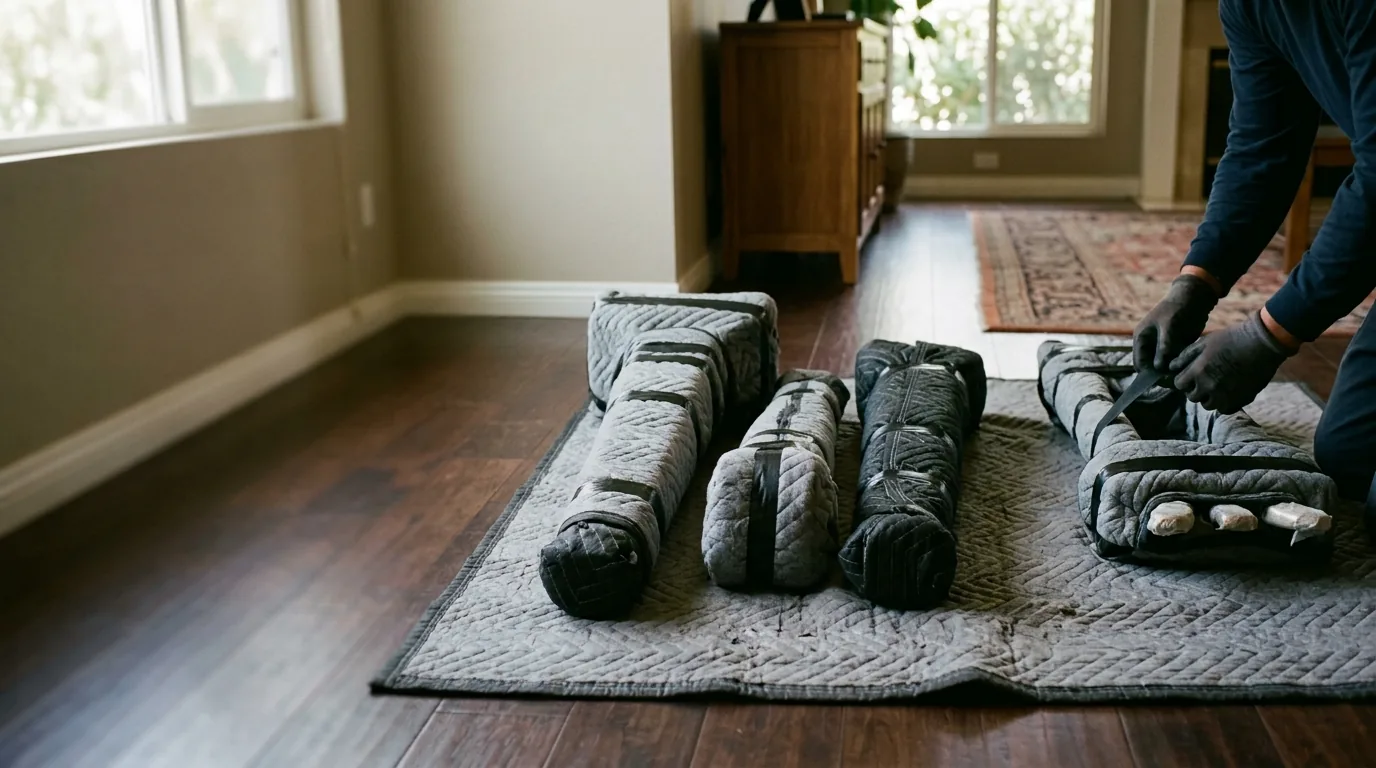
Moving an Antique Piano: What Changes When the Instrument Is 100 Years Old
October 12, 2026 · 6 min read
Piano Care
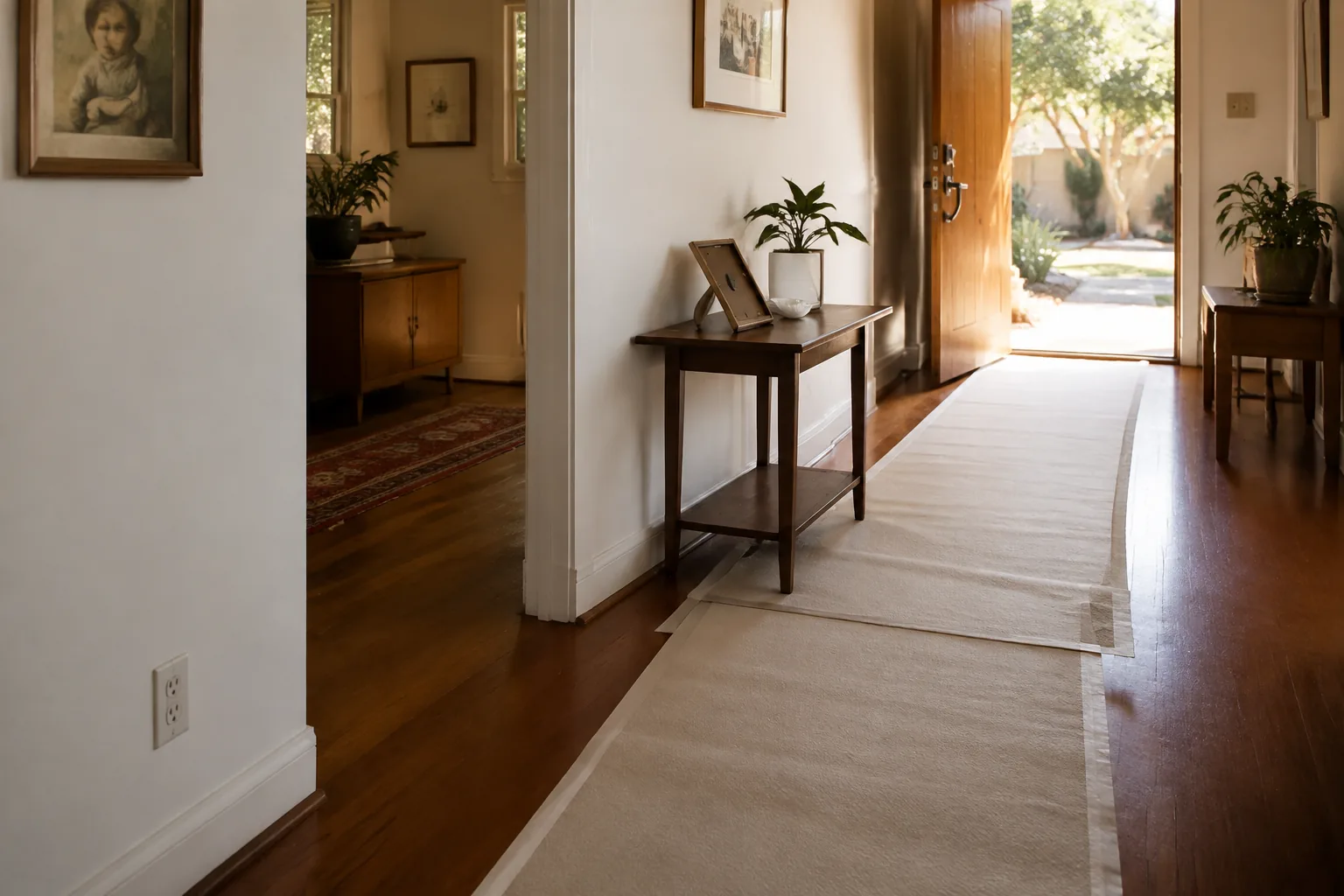
Moving a Piano in the Rain: How We Protect Your Instrument in Wet Weather
October 5, 2026 · 6 min read
Moving Tips
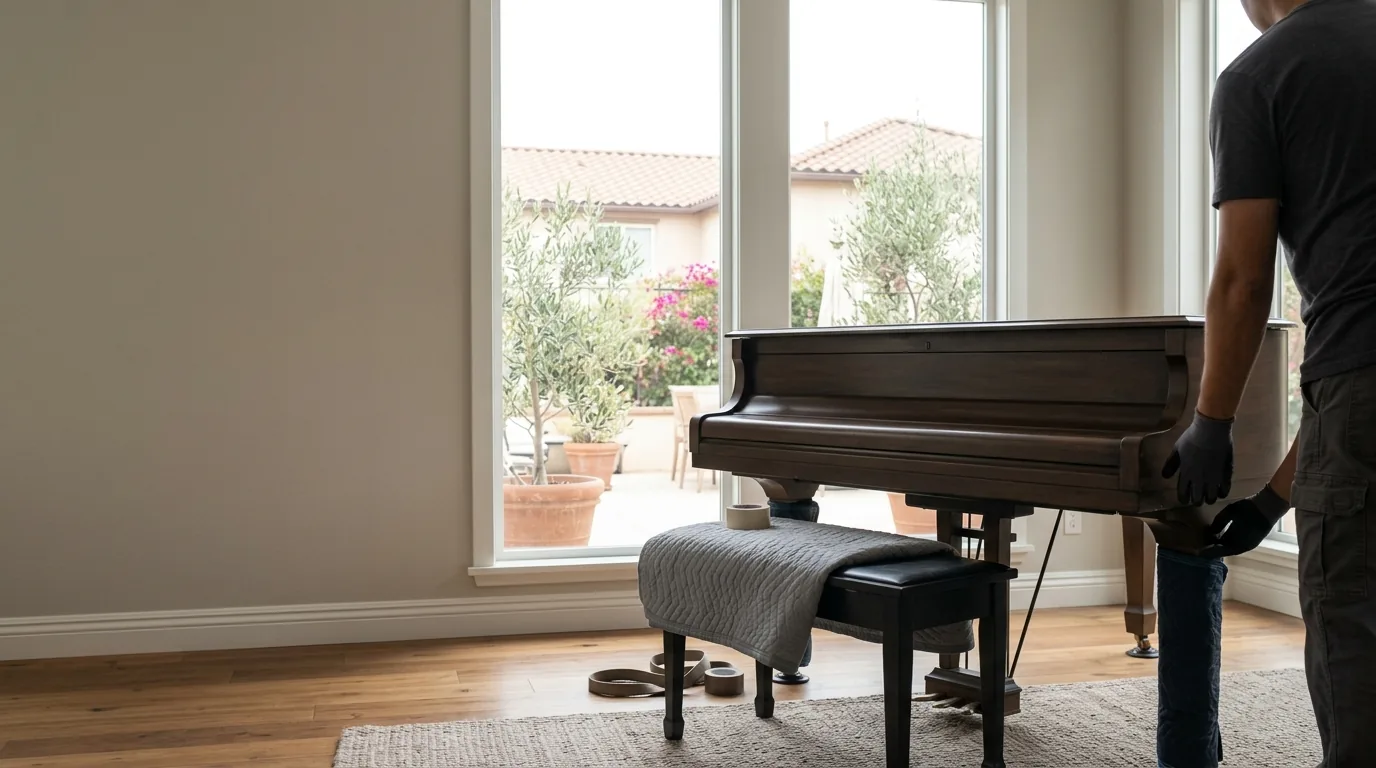
How Long Does It Take to Move a Piano? Realistic Timings by Type and Access
September 28, 2026 · 7 min read