
Military PCS Piano Move in San Diego: Orders, Storage, and Long-Distance Transport
A PCS move runs on dates you did not choose. Orders come down, a report date gets fixed, and everything else — housing, schools, vehicle shipment, the household goods pickup window — has to bend around it. A piano is the one item in the house that does not bend easily.
We have been moving pianos and organs for San Diego families since 1989, including a steady stream of service members rotating through Camp Pendleton, MCAS Miramar, Naval Base Coronado, Naval Base San Diego, and Naval Base Point Loma. Here is how we see PCS piano moves actually play out, and what to decide early so the instrument is not the thing that goes wrong.
Start With the Report Date, Not the Pack Date
Most families build the move backward from the household goods pickup. For a piano, work backward from the report date instead, because the piano often needs a different schedule than the rest of the house.
Three common patterns:
- Piano goes before the household goods. You want it out of the way so packers have room, or the receiving home is already available. We pick up early and either deliver or hold the instrument in storage.
- Piano goes after the household goods. The family stays in the home through the final days and the piano is the last item out. This is common with on-base housing clearance.
- Piano goes into storage indefinitely. Unaccompanied tour, overseas orders, or a receiving home that cannot take a 700-pound instrument. The piano waits in San Diego until the next set of orders.
Tell us which pattern you are in on the first call. It changes the truck, the crew, and whether we are quoting a one-way move or a store-and-ship.
Why the Piano Often Moves Separately From the Household Goods
Pianos are heavy, oddly shaped, and unusually sensitive to handling. A spinet runs roughly 300 to 400 pounds. A full-size upright is commonly 500 to 800 pounds. A 5-foot-something baby grand typically lands between 500 and 650 pounds, and a 7-foot grand can exceed 900. We break the numbers down by type in our guide to how much a piano weighs.
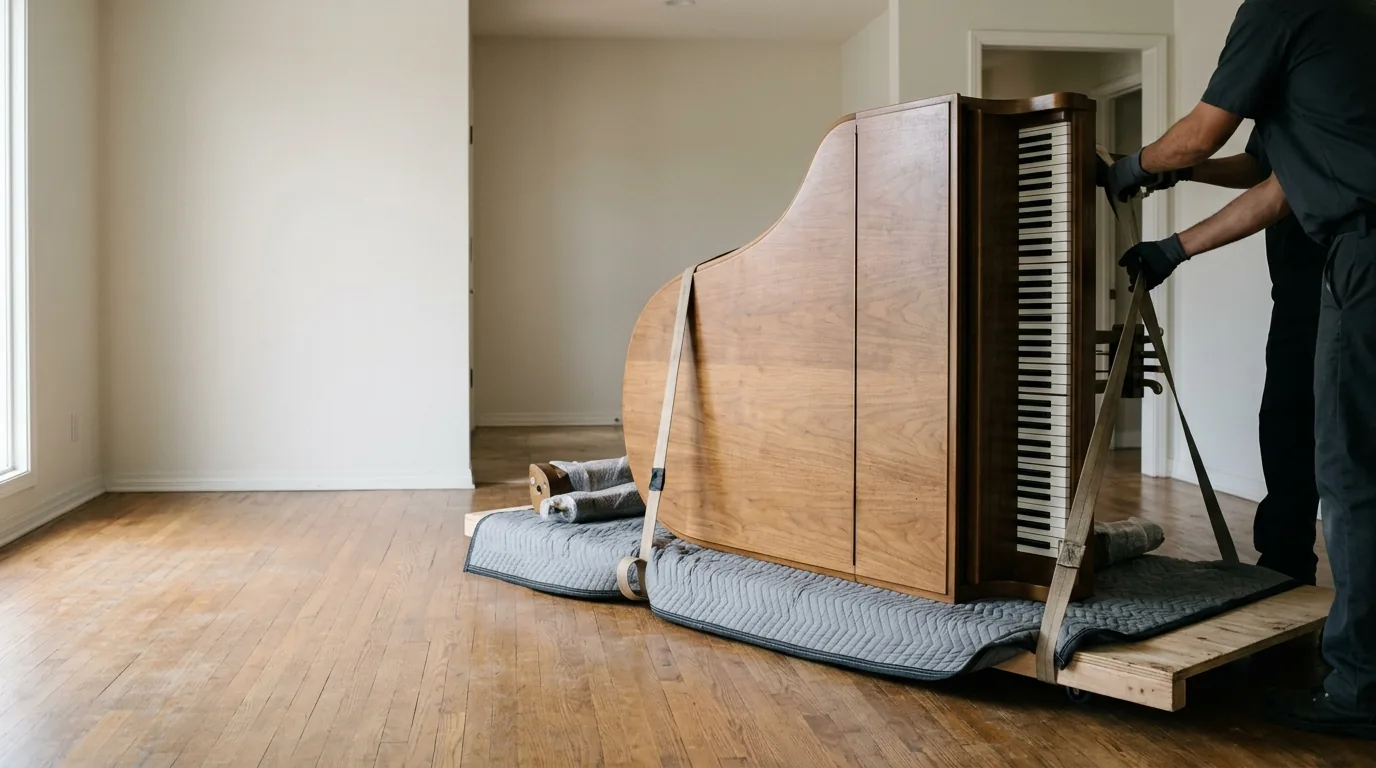
That weight matters twice. It matters physically, because a grand has to be unfooted, laid on its side on a padded piano board, strapped, and rolled — not carried upright through a doorway. And it matters administratively, because weight counts against entitlements on a government-arranged shipment.
Many service members choose to handle the piano as a separate specialty move for one or more of these reasons: they want a dedicated crew with piano boards and skid equipment, they want the instrument on a truck that is not stacked with 15 other households, or they want to control the delivery date rather than accept a spread window. Entitlement rules, weight allowances, and reimbursement options change, so confirm your specific situation through your installation transportation office or Military OneSource before you commit to an approach.
Access Realities at San Diego-Area Duty Stations
Base housing and surrounding rentals create predictable obstacles. We ask about these before quoting, because they drive crew size and time on site more than mileage does.
- Stairs. Older on-base units and North County townhomes frequently put the living room on a second level. A straight run of stairs is manageable; a winder or switchback with a tight landing is a different job. See what stairs actually change about a piano move.
- Gate and escort requirements. If the pickup or delivery is inside a controlled area, we need to know the access process and any visitor-pass lead time well ahead of the move day.
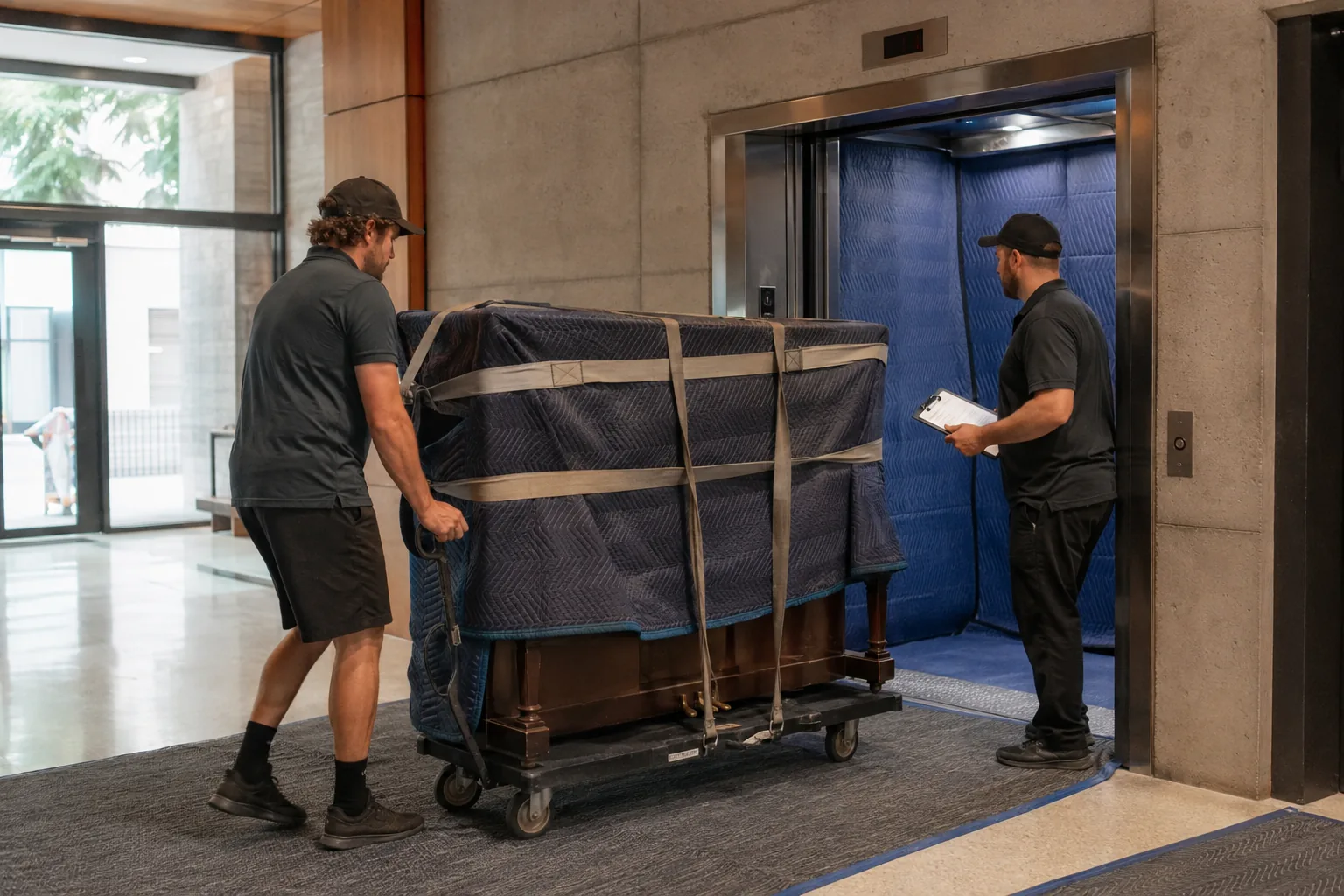
- Elevators and building rules. Downtown and Coronado condos often require a reserved freight elevator and a certificate of insurance. We cover that process in our post on moving a piano into a San Diego apartment or condo.
- Narrow driveways and street parking. Oceanside, Vista, and Carlsbad neighborhoods near Pendleton sometimes mean a longer carry from the truck. Flag it early.
We serve the full span of these areas, including Oceanside, Carlsbad, Chula Vista, and San Diego proper, plus Riverside, Orange, and San Bernardino counties.
Storage Between Duty Stations
This is the most common PCS scenario we handle: the piano has to go somewhere for three months, a year, or a full tour, and nobody wants to decide its future during the last week before a report date.
A standard self-storage unit is the wrong answer. Soundboards, bridges, and pinblocks respond to moisture swings, and an uninsulated metal unit in inland San Diego County can swing hard between a humid coastal morning and a 100-degree afternoon. Glue joints loosen, veneer lifts, and felt and leather absorb whatever is in the air. We explain the mechanics in why a standard unit is the wrong choice and why climate control matters in Southern California.
Our climate-controlled piano and organ storage is built for instruments specifically. For PCS families, the practical benefit is that one company picks up the piano, holds it, and later ships it to the new duty station — no second mover, no second round of handling risk, no re-explaining the instrument to someone new.
Long-Distance Transport to the Next Station
Orders out of San Diego go everywhere: Lejeune, Norfolk, Pensacola, Bremerton, Okinawa by way of a stateside storage plan. For the stateside legs, our long-distance piano moving service moves the instrument on equipment set up for pianos rather than mixed freight.
What drives cost and schedule on a long-distance PCS piano move:
- Instrument type and size. An upright and a 7-foot grand are different jobs. Our breakdown of what movers charge by piano type explains why.
- Access at both ends. Stairs, elevators, long carries, and truck parking on each side.
- Delivery flexibility. A fixed delivery date costs more than a window. If you have a hard report date, say so up front.
- Storage time in the middle. Duration, and whether the outbound destination is known yet.
For a fuller picture of how multi-state piano transport works, read cross-country piano moves from San Diego.
Two Things to Handle on the Other End
First, budget for tuning after the move — not immediately, but after the piano has acclimated to the new climate for a few weeks. We do not tune pianos, but our guide on post-move tuning explains the timing so you can book a technician at the new station.
Second, document condition before the truck leaves. Photograph the case, legs, lid, pedal lyre, and bench from several angles. It takes five minutes and it is the single most useful thing you can do if a question comes up later. Our post on coverage, claims, and documentation walks through the process.
Get a Quote Before the Orders Get Tight
The best time to call us is the week you know the report date — not the week before pickup. Early scheduling gives you a real choice between moving the piano and storing it, and it keeps the instrument from becoming a last-minute problem on top of everything else a PCS demands.
Tell us the piano type, the pickup address, the destination (or that it is still unknown), and your date constraints. Call (800) 499-5733 or request a quote, and we will put together a plan that fits your orders. If you are still comparing providers, our list of questions to ask a piano mover before you book is a good place to start.
Further reading
Military OneSource — U.S. Department of DefenseNeed a piano moved in Southern California?
San Diego Piano Movers has moved pianos across San Diego, Riverside, Orange County, and beyond since 1989. Call for a free quote from a piano-only specialist crew.
More from the blog
Storage
Moving a Piano Into a Storage Unit: Why a Standard Unit Is the Wrong Choice
October 26, 2026 · 6 min read
Moving Tips
Protecting Hardwood Floors During a Piano Move: Caster Cups, Runners, and Real Causes of Damage
October 19, 2026 · 6 min read
Piano Care
Moving an Antique Piano: What Changes When the Instrument Is 100 Years Old
October 12, 2026 · 6 min read